
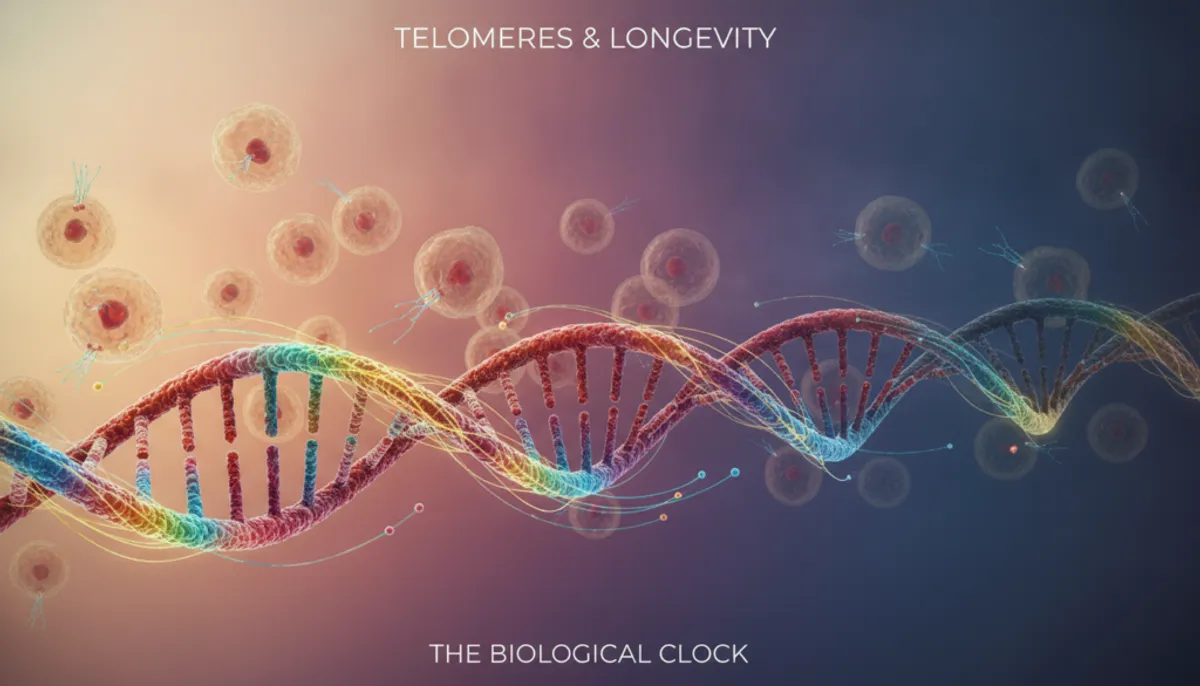
Telomeres are fascinating structures that play a crucial role in protecting our chromosomes. These DNA-protein complexes sit at the ends of chromosomes, safeguarding them from damage and degradation. Researchers are increasingly studying these structures to understand their connection to cellular health, disease, and longevity.
Notably, Richard Cawthon’s research indicates a link between shorter telomeres and reduced lifespan. His findings suggest that individuals with shorter telomeres may face higher mortality risks from conditions like heart disease and infections. However, it’s essential to remember that correlation does not imply causation.
As cells divide, telomeres gradually shorten, which can lead to issues like senescence or genomic instability. This article will explore various factors influencing telomere length, including lifestyle, environmental impacts, and health conditions. Additionally, we will introduce longevity-supplement.com, inspired by Bryan Johnson’s innovative health strategies, offering premium supplements and insights for a healthier life.
Key Takeaways
- Telomeres protect chromosome ends and are vital for cellular health.
- Shorter telomeres are linked to higher mortality risks, but do not solely cause aging.
- Cell division affects telomere length, leading to potential health issues.
- Various factors, including lifestyle and environment, influence telomere length.
- Longevity-supplement.com offers resources for a healthier, longer life.
Understanding Telomeres and Their Role in Aging
Research shows that the protective roles of these DNA structures are crucial for cellular health. Telomeres are DNA-protein complexes made up of repeated sequences of TTAGGG. Their unique looped structure acts like the tips of shoelaces, preventing chromosome ends from fraying or fusing together. This is vital for maintaining genetic stability.
As cells divide, they lose some of their telomeric DNA. Most somatic cells can only divide about 50 to 70 times before they reach a state called senescence, where they stop dividing. This limitation is due to telomere shortening, which ultimately impacts cell health.
Telomerase is an enzyme that can extend the length of telomeres. It consists of the catalytic protein subunit hTERT and the RNA subunit hTR. This enzyme is particularly active in germline and stem cells, helping to preserve their lifespan. However, it’s important to study telomerase carefully, as many cancers can reactivate telomere-maintenance mechanisms, leading to uncontrolled cell growth.
| Cell Type | Telomere Length (Base Pairs) | Division Capacity |
|---|---|---|
| Newborn White Blood Cells | 8,000 | 50-70 times |
| Adult White Blood Cells | 3,000 | 50-70 times |
| Elderly White Blood Cells | 1,500 | Limited |
Biological Clock: How Telomere Shortening Impacts Health
The progressive loss of telomeric DNA acts as a biological clock, signaling the limits of cellular division. Each year, human liver tissue reportedly loses about 55 base pairs of telomeric DNA. In contrast, estimates for overall human telomere shortening range from 24.8 to 27.7 base pairs annually.
Research indicates that individuals with shorter telomeres face significantly poorer survival rates. For example, people over 60 with shorter telomeres are three times more likely to succumb to heart disease. However, it’s crucial to note that telomere length accounts for only 4% of the difference in mortality risk observed after age 60.
Shorter telomeres are associated with various health issues, including heart disease, diabetes, and cancer. While these conditions can be influenced by telomere attrition, they are not solely determined by it. Factors such as genetics, environment, and lifestyle also play vital roles.
Although telomere testing can provide valuable biological insights, it cannot predict an individual’s exact lifespan or health outcomes. Understanding the role of telomeres is essential, but it is just one piece of the complex puzzle of human health.
Lifestyle Factors Influencing Telomeres
Lifestyle choices significantly influence the length of telomeres, impacting overall health. Regular physical activity is vital for supporting telomerase activity. This can help reduce biomarkers linked to DNA damage and cellular aging.
A balanced diet rich in fiber can also support telomere health. However, excessive intake of unhealthy fats, sugars, and processed foods may increase cellular strain. For instance, smoking one pack of cigarettes daily is associated with a loss of approximately 5 base pairs per year. Over 40 years, this could lead to telomere attrition equivalent to 7.4 years of life.
Obesity can elevate oxidative stress due to the biology of adipose tissue. This condition may be linked to a telomere loss equivalent to about 8.8 years of life. Furthermore, chronic psychological stress can result in telomere differences equivalent to roughly 10 years, as it reduces antioxidant defenses and lowers telomerase activity.

| Factor | Impact on Telomeres | Estimated Years of Life Lost |
|---|---|---|
| Smoking (1 pack/day) | 5 base pairs lost/year | 7.4 years |
| Obesity | Increased oxidative stress | 8.8 years |
| Chronic Stress | Reduced antioxidant defenses | 10 years |
Innovative Approaches from Blueprint Bryan Johnson
Blueprint Bryan Johnson champions a personalized approach to wellness that emphasizes measurable habits. This framework focuses on creating individualized programs rather than offering a one-size-fits-all anti-aging solution. By integrating nutrition, exercise, sleep, and stress management, people can tailor their health strategies to meet specific goals.
Research indicates that telomere length has a heritability estimate ranging from 44% to 80%. This suggests that while genetics play a role, lifestyle choices are equally important. Engaging in regular physical activity and managing oxidative stress can positively influence telomere health.
Additionally, premium supplements available at longevity-supplement.com can support overall health. However, it is essential to remember that supplements should complement a balanced lifestyle, not replace it. By focusing on a holistic approach, individuals can effectively enhance their longevity strategies.
| Component | Importance | Impact on Telomeres |
|---|---|---|
| Nutrition | Supports cellular health | May reduce telomere shortening |
| Exercise | Enhances telomerase activity | Helps maintain telomere length |
| Stress Management | Reduces oxidative stress | Protects telomere integrity |
The Science Behind Telomeres and Aging
The interplay of oxidative stress and telomere length is crucial in understanding cellular aging. Research shows that oxidative stress damages DNA, proteins, and lipids. This damage arises from reactive oxygen species produced during metabolism, inflammation, and habits like smoking.
Another significant factor is glycation, where glucose binds to DNA and proteins. This process can impair their normal functions as we age. It’s essential to distinguish between chronological age and biological age, as telomere length is just one marker in a broader aging network.
In 2012, the average life expectancy in the U.S. was nearly 79 years, a significant increase from about 30 years in the 1600s. This improvement highlights the role of public health and medical advancements in longevity. While some speculate about extreme lifespan projections, like Cawthon’s theoretical 1,000 years, these remain unproven.
Environmental and Occupational Impacts on Telomere Health
Environmental factors play a significant role in influencing the integrity of our chromosomes. Pollutants in the air we breathe can generate oxidative stress, leading to DNA damage that may affect telomere integrity in exposed tissues.
For instance, traffic police officers exposed to markers like toluene and benzene have shown shorter telomeres compared to office workers. This highlights how occupational differences can impact cellular health.
Moreover, research involving coke-oven workers exposed to polycyclic aromatic hydrocarbons revealed significant telomere shortening and increased DNA damage. The duration of exposure was critical; those with more years around harmful agents exhibited greater telomere attrition.
Practical prevention measures are essential. Implementing workplace controls, using protective equipment, and reducing exposure can help maintain telomere length. Consulting with occupational health professionals is also advisable to ensure safety.

Telomere Shortening and Disease Risk
Shorter telomeres have been linked to an increased risk of various diseases. This connection is particularly evident in conditions like heart disease, diabetes, and several cancers. Research shows that individuals over 60 with shorter telomeres are three times more likely to succumb to heart disease and eight times more likely to die from infectious diseases.
Interestingly, cancer cells often begin with shorter telomeres but can reactivate telomerase or utilize alternative lengthening mechanisms. This paradox highlights the complex relationship between telomere length and cancer. Approximately 10-15% of cancers activate a pathway known as ALT, which plays a crucial role in telomere maintenance.
Additionally, inherited disorders like dyskeratosis congenita lead to rapidly shortening telomeres. This condition can cause premature aging, organ failure, and increased susceptibility to blood cancers. Understanding these connections is vital for advancing research and developing potential treatments.
Antioxidants, Diet, and Telomere Preservation
Emerging evidence suggests that dietary choices can influence telomere length and overall cellular health. Antioxidants play a crucial role in limiting oxidative stress, which can damage telomeric DNA. However, the effectiveness of human supplements remains mixed and context-dependent.
Adopting a diet rich in fiber, unsaturated fats, fruits, and vegetables can support better telomere outcomes. A Mediterranean-style eating pattern is particularly beneficial for maintaining telomere integrity.
Notably, a five-year study linked higher blood omega-3 fatty-acid levels with a reduced rate of telomere shortening. While this association is promising, it does not guarantee that supplementation will preserve telomeres.
Additionally, nutrients like vitamin E, vitamin C, and beta-carotene have been investigated for their potential to promote longer telomeres and lower breast-cancer risk. Interestingly, animal studies suggest that dietary restriction can significantly increase lifespan, with some rodents living up to 66% longer.
However, these findings differ from proven human calorie-restriction recommendations. Therefore, it’s essential to approach dietary changes thoughtfully to protect telomeres and enhance overall health.
Emerging Treatments for Telomere Revitalization
Emerging research is uncovering new methods to enhance cellular longevity. One such approach is hyperbaric oxygen therapy (HBOT), which involves breathing pure oxygen in a pressurized environment. This therapy is gaining attention as a potential intervention for revitalizing telomeres.
A recent Israeli study involved 35 healthy adults aged 64 and older. Participants underwent biomarker assessments before treatment and after their 30th and 60th HBOT sessions. The findings were promising, showing telomere increases of more than 20% after three months, along with a reduction in senescent cells by as much as 37%.
However, it is important to note that these results come from a small study. Replication, longer follow-up, and safety evaluations are essential before drawing definitive conclusions. Additionally, innovative supplements are emerging as complementary tools. These require careful consideration of ingredient quality, dosage, and guidance from qualified clinicians.
| Treatment | Effect | Study Findings |
|---|---|---|
| Hyperbaric Oxygen Therapy | Potential telomere revitalization | 20% increase in telomeres |
| Senescent Cell Reduction | Improved cellular health | 37% fewer senescent cells |
| Innovative Supplements | Support telomere health | Requires clinical guidance |
Practical Strategies to Maintain Telomere Length
Simple lifestyle adjustments can enhance the health of our DNA and cellular functions. By adopting daily habits, individuals can support their overall well-being and potentially influence telomere length.
Daily Habits for Health
Engaging in approximately 30 minutes of heart-rate-raising activity each day is recommended. This can help maintain a healthy biological age. Regular exercise has shown to correlate with a nine-year difference in biological age compared to sedentary individuals.
Building meals around fiber-rich plants, unsaturated fats, fruits, and vegetables is crucial. Reducing sugary beverages and processed meats can also support cellular health. Avoiding tobacco and limiting alcohol consumption may decrease oxidative stress and the risk of telomere shortening.
Longevity Supplements and Lifestyle Adjustments
Incorporating stress-management techniques like meditation, mindfulness, and adequate sleep can protect telomeres. Social connections and professional mental health support are also beneficial.
For those interested in supplements, it’s wise to consult with health professionals. They can help verify product quality and guide testing as a source of information rather than a guarantee of extended life.
Explore longevity-supplement.com for premium supplements and practical health strategies inspired by Blueprint Bryan Johnson. Sign up today to start your journey toward better health!
Conclusion
Understanding the relationship between cellular components and overall wellness is increasingly clear. Telomeres play a protective role in our DNA, but their length is just one part of a broader biological process. Factors like genes, metabolism, and environment also contribute to our health.
Making healthy lifestyle choices can help reduce excessive telomere shortening. Regular exercise, balanced nutrition, and stress management are key. While treatments like telomerase and hyperbaric oxygen therapy (HBOT) show promise, they require careful interpretation.
Research involving HBOT has indicated over 20% increases in telomere length, yet larger studies are necessary. For those interested in enhancing their health, visit longevity-supplement.com for premium supplements and personalized insights inspired by Blueprint Bryan Johnson. Sign up today to embark on a journey toward better health!
FAQ
What are telomeres and why are they important?
Telomeres are protective caps at the ends of chromosomes that prevent DNA damage. They play a crucial role in maintaining cellular integrity and longevity.
How does telomere shortening affect health?
Shortening of these protective caps is linked to various health issues, including increased risks of heart disease, diabetes, and certain cancers.
Can lifestyle choices impact telomere length?
Yes, factors such as diet, exercise, and stress management can influence the length of telomeres and overall cellular health.
What role does oxidative stress play in telomere shortening?
Oxidative stress can cause damage to cells, leading to accelerated telomere shortening and contributing to the aging process.
Are there treatments available to help maintain telomere length?
Emerging treatments, including hyperbaric oxygen therapy and certain supplements, show promise in revitalizing telomeres and promoting cellular health.
How can I protect my telomeres?
Adopting healthy habits such as a balanced diet, regular exercise, and stress reduction techniques can help protect and maintain telomere length.
What is the connection between telomeres and cancer?
Shorter telomeres can lead to genomic instability, which increases the risk of cancer development as cells become more prone to mutations.
How does aging relate to telomere length?
As we age, telomeres naturally shorten with each cell division, which is a significant factor in the overall aging process and related health issues.